


If there’s one plant pest that causes more worry to gardeners than any other, it’s probably the Black vine weevil (Otiorhynchus sulcatus).
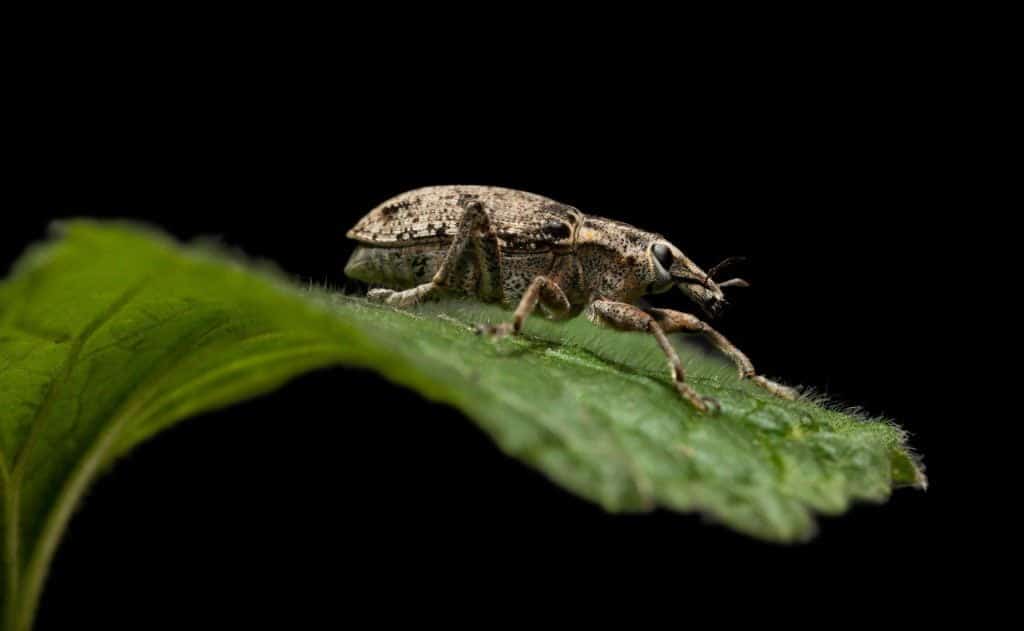
The adults are flightless beetles, black in colour with dull yellow spots on their backs and about 1cm long. They also have distinctive elongated snouts and so are sometimes called snout beetles. And they are usually first seen during May, feeding nocturnally on garden plants and shrubs where they cause notches around the leaf edges.
Black vine weevils are parthenogenic, which means they lay fertile eggs without having to mate, and they are also highly fecund, laying around 1000 tiny eggs into the soil around suitable host plants. The eggs soon hatch into tiny white ‘C’ shaped grubs that begin feeding on the plant roots. Root damage becomes more and more severe as the larvae grow and often leads to the plant wilting or dying.
By autumn, the almost mature larvae stop feeding and hibernate for the winter within the roots
They only awaken when warm spring weather arrives, enabling them to rapidly finish their life as a larvae and pupate. Within a couple of weeks vine weevil adults then begin hatching and emerging from the soil to lay eggs and produce the next generation.
Unfortunately, vine weevils are a common pest in home gardens and can often lead to the regular use of long-lasting systemic pesticides. However, these broad-spectrum pesticides can also harm the beneficial creatures that would naturally predate on vine weevil such as ground beetles and centipedes. The non-chemical option of applying Entomopathogenic nematodes, during mid to late summer when the soil temperature right, along with a dry surfaced pot topper could perhaps offer an environmentally safer alternative.